
Archive Templates
Archive templates provide a shared design for lists of content, such as category posts, author articles, and custom post type archives.
Create an Archive Template
- Go to Breakdance > Templates > Add Template and choose Add Custom Template.
- Enter a Title.
- Choose a Location for your archive; consult Choose the Location below for the available options. Click Add template.
- Click Edit in Breakdance to build the layout.
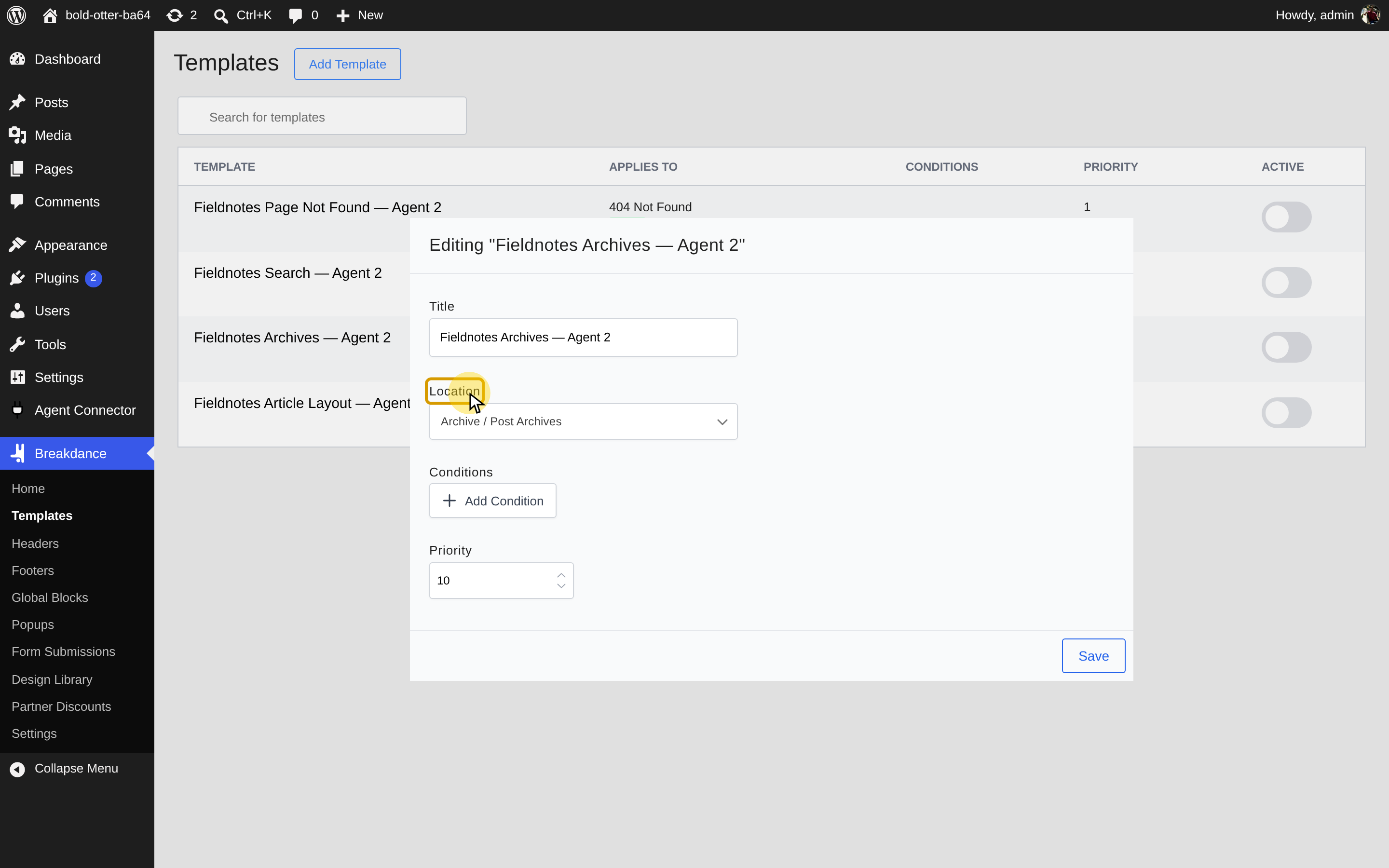
Choose the Location
| Location | Coverage |
|---|---|
| All Archives | Taxonomy, date, author, and post type archives; excludes the separate posts index. |
| Post Archives | Archives and the posts index; excludes WooCommerce archive/shop requests when WooCommerce is active. |
| Taxonomy Archive | Category, tag, or custom taxonomy term archives. |
| Date Archive | Year, month, or day archives. |
| Author Archive | An author’s posts. |
| Post Type Archive | Post type archives, with posts-index support; narrow with the available Post Type condition. |
Settings > Reading in WordPress controls the posts index. Custom post types must have an archive registered; templates do not create archive URLs.
Editing the Template in Breakdance
Go to Breakdance > Templates, hover over your template, and click Edit in Breakdance. Add and style elements as you would on a page, then click Save.
Link design elements to dynamic data for the current archive, such as Archive Title and Archive Description. See Dynamic Data.
Displaying the Posts in the Archive
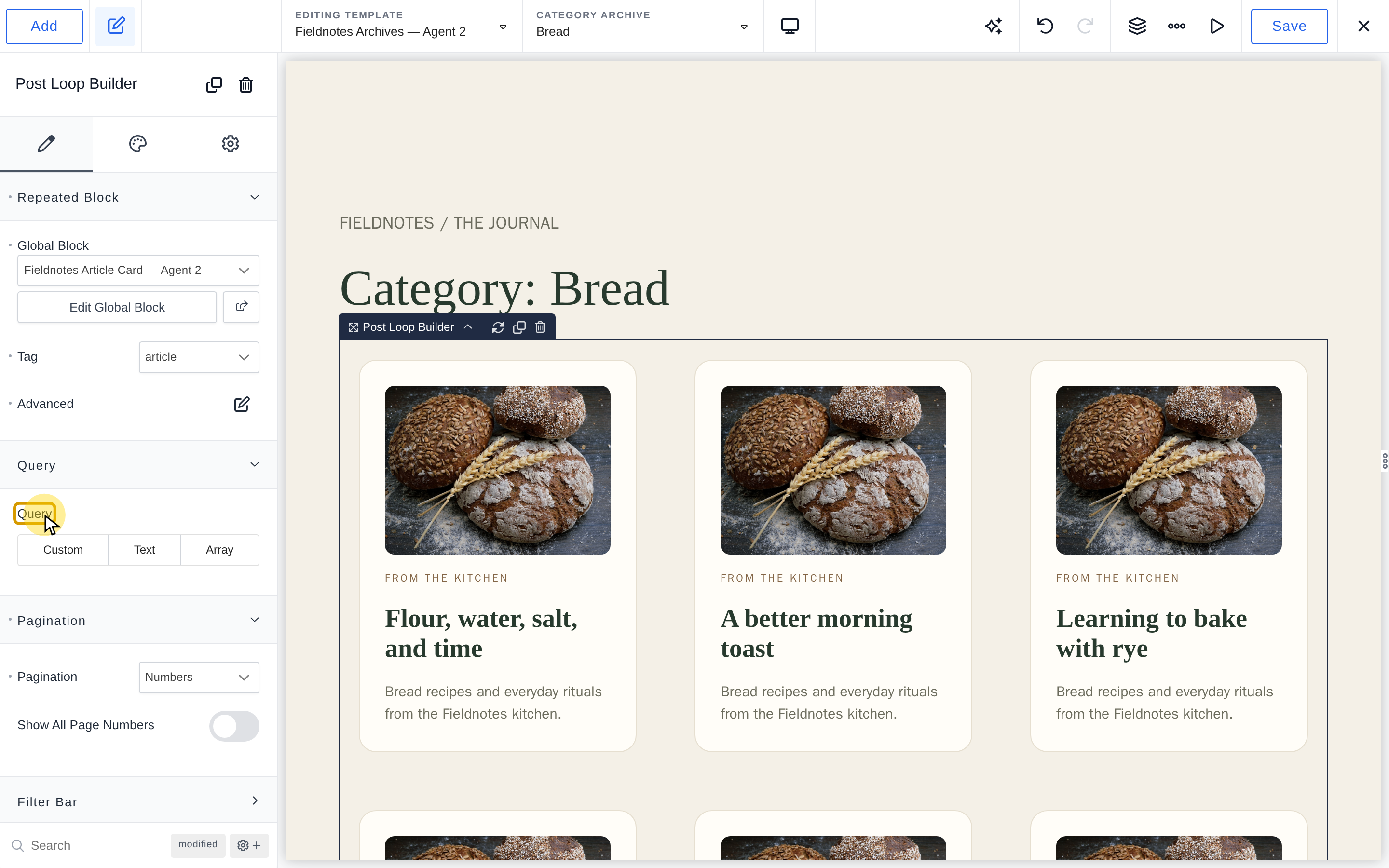
Use a loop to display the archive's posts, repeating your design for each item. See Post Loop Builder for how to create and style the loop.
Change the Preview
Click the current preview archive's name in the top bar, beside the template name, and choose another archive. The editor displays its title and results without changing where the template applies.
Pagination
WordPress controls pagination for the archive's results. To change the number of posts per page, go to Settings > Reading in the WordPress admin, set Blog pages show at most, and click Save Changes. See WordPress Reading Settings for details.
Use the Post Loop Builder pagination controls to choose how visitors move between pages of results.
Empty Results
Set When Empty to a no-results block. For a separate empty-page design, use another matching template with WP_Query Found Posts Count is less than 1 and higher priority.